
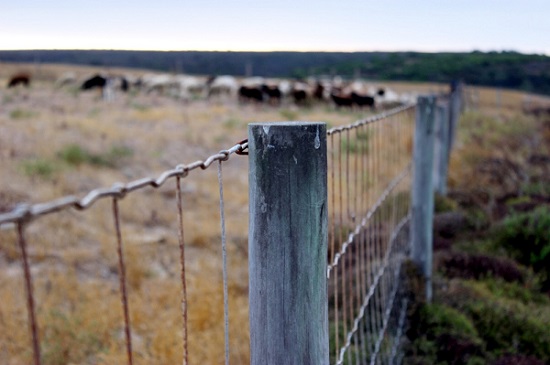
High fences have been used across the country since the 1930s to manage game and game breeding. High fence installations are considered essential to a property’s security and safety. An increasing number of property owners have been engaging the services of high fence contractors through the years due to the following benefits:
- Herd control. Deer and other game can be efficiently fenced in or out of a property. This can help to prevent disputes, theft, and potential property damages. The landowner can also use high fences to help regulate populations depending on the capacity of the land.
- Improved scientific data gathering. Using high fences, biologists can estimate herd size, adult sex ratio, reproduction, and other parameters.
- Prevents the incidence of vehicle collisions. High fence enclosures near public roads can lower the risk of accidents.
High fence regulations vary from state to state. Learn more below about high fence installation regulations in the Southeastern states.
Alabama
The state of Alabama is free-wheeling when it comes to high fence properties and enclosures. There are no minimum acreage requirements or permits to be filed, but hunters are required to adhere to state hunting regulations.
Florida
There are no high fence regulations in Florida, and any resident can install a high fence around a property. The maximum height of any fence is eight feet, and it must be installed 2 to 8 inches from a property line. Any game enclosed within a high fence is considered state property.
Hunting preserves in Florida must be at least 200 acres to qualify for a license; at least 50 percent of that area should be well-vegetated and posted every 500 feet, and a preserve’s high fence must be at least 8 feet in height.
Georgia
The state of Georgia allows anyone who owns 640 acres of land to install a high fence on their property. All game within high fence properties is considered state-owned and local hunting regulations must be followed.
Properties smaller than 640 acres must obtain a permit to erect a high fence.
Louisiana
The Louisiana Department of Wildlife and Fisheries does not officially approve of high fences. Landowners may prevent anyone from hunting or fishing in their property. However, any captured wildlife, despite the prohibition of entry, belongs to the captor.
Mississippi
High fence property owners in Mississippi are required to obtain an annual Facility Permit, which costs $300 a year for enclosures up to 300 acres. Properties larger than 300 acres must pay a fee of $1 per acre.
The state’s Enclosure Management Assistance Program oversees all high fence enclosures. A wildlife biologist from the Mississippi Department of Wildlife, Fisheries, and Parks (MDWFP) will draft a management plan for the licensed enclosure and conduct inspections as needed.
Breaches or openings in an enclosure must be reported to the MDWFP within 24 hours of discovery. Any game that escapes from a high fence enclosure and poses a risk to public safety may be captured and/or euthanized by MDWFP representatives or by any law enforcement agency.
Virginia
With the exception of high fence enclosures registered before August 2001, all fences that impede game movement are considered illegal in the state of Virginia.
Should there be a need to build a fence between neighbors, an owner of the game or livestock has to pay for the construction, maintenance, and preservation of the fence.
High fencing regulations are continuously evolving, and seasoned high fence contractors should be familiar with all of state and local laws. Consult with your state wildlife agency and local law enforcement officials for the latest updates.
Straight Shooter Game Fencing is a high fence contractor specializing in high-tensile game fence. We deliver the best fencing installation and maintenance services, as well as fencing materials, at competitive prices. Get in touch with us to know more.
 As technology becomes more and more integrated into the workplace,
  Crowdsourcing is a form of project management that pulls from the time, talents, and resources of a large pool of workers. Crowdsourcing has been utilized across the globe in areas such as software development, image tagging, and transcription. And while the relative low cost of crowd-completed work may be appealing to a business on a tight budget there are many disadvantages.
 Although it may seem more challenging than ever to provide a quality education while keeping costs low, many colleges and universities across the country are succeeding on both counts.
 A pair of new surveys reveal interesting developments about business creation in America’s leading cities.
 C. Frederick Wehba is recognized in the real estate community as one of the most trusted advisors and leaders in the field. From his home base in Los Angeles, California, C. Frederick Wehba has made a considerable difference in the lives of his tenants, as well as his fellow community members. In this interview with A Gathering of Experts, C. Frederick Wehba describes his humble beginnings in Crowell, Texas, and how these experiences informed his later work.
 As the former Chief Counsel and Director of Intellectual Property & Licensing at Cell Signaling Technology, Inc., James Cullem reflects on the pivotal issuance to the company of a U.S. patent covering a vital class of Context-Independent and Motif-Specific Antibodies.
  In a shocking move to outside observers, Mark Zuckerberg has given away approximately 8 percent of Facebook and forked over $4 billion to acquire WhatsApp.
 Stress influences a person’s physical and mental health, which in turn affects their ability to make decisions, deal with problems, and interact with others. Managing stress is imperative for a productive, happy life. A person saying they are going to reduce the stress in their life and actually doing it is easier said than done. Here are a few steps people can take to ease tension and help them relax.